
Santa Barbara City Directory Holdings
Santa Barbara has an unusually strong local directory run. The shelves preserve a countywide beginning, named early city editions, a near-continuous twentieth-century sequence, and reverse sections that change the search from a person's name to an address. The table separates verified title and publisher evidence from years where a title page still needs inspection.
| Collection | Years | Publisher or title evidence | Where held | Access |
|---|---|---|---|---|
| County directory | 1875 | L. L. Paulson | Gledhill Library | Physical research copy |
| Early city volumes | 1886, 1888, 1893, 1895-96, 1897 | Independent Publishing Company for 1886 and 1888; Bynon & Co. for 1895-96 | Gledhill and Sahyun | 1886 and 1895-96 scans are free online; other access varies |
| Near-continuous city sequence | 1901-1991 | Publisher varies. Dana Burks and Santa Barbara Directory Co. are documented for 1904-09 | Gledhill and Sahyun | Printed research collection |
| Reverse or householder sections | 1911 onward in the run | Publisher by year needs title-page checking | Gledhill physical run | Address-first research in person |
| Montecito and Goleta coverage | 1956 onward | Various editions | Gledhill through 1991 | Check the edition's stated geography |
| Business and telephone companions | 1922, 1926, 1933 | Special business directory and telephone books | Sahyun digital collection | Free PDFs with different scope from resident volumes |
The 1875 volume covered Santa Barbara County, while later volumes can be city-only or can add nearby communities. Later editions are often cataloged as Polk directories, but the assigned local catalogs do not verify one publisher for every year after 1909. Photograph the masthead when working from a physical copy.
Santa Barbara Directory Shelves
The Sahyun Genealogical Library of the Santa Barbara County Genealogical Society, at 316 Castillo Street, is a public, non-lending research library with more than 22,000 items. It offers volunteer help, 12 computer workstations, Wi-Fi, scanners, printers, and photocopying. Stated hours are Tuesday and Thursday from 10 to 4, most Sundays from 1 to 4, and third Saturdays from 1 to 4 from September through July. The public catalog needs SBCGS in its upper box and no password.
The Santa Barbara County society's open digital collection includes the 152-page 1886 volume, the 89-page 1895-96 volume, the 1922 business directory, 1926 and 1933 telephone books, and nearby-community editions. The direct Sahyun library page and its digital materials are useful when a name needs a free first pass. Large image PDFs can have weak OCR, so browse alphabetically and test spelling variants.
The Sahyun Genealogical Library appears in the assigned collection image:
See the Santa Barbara County Genealogical Society's Sahyun holdings for the local shelf and access details.
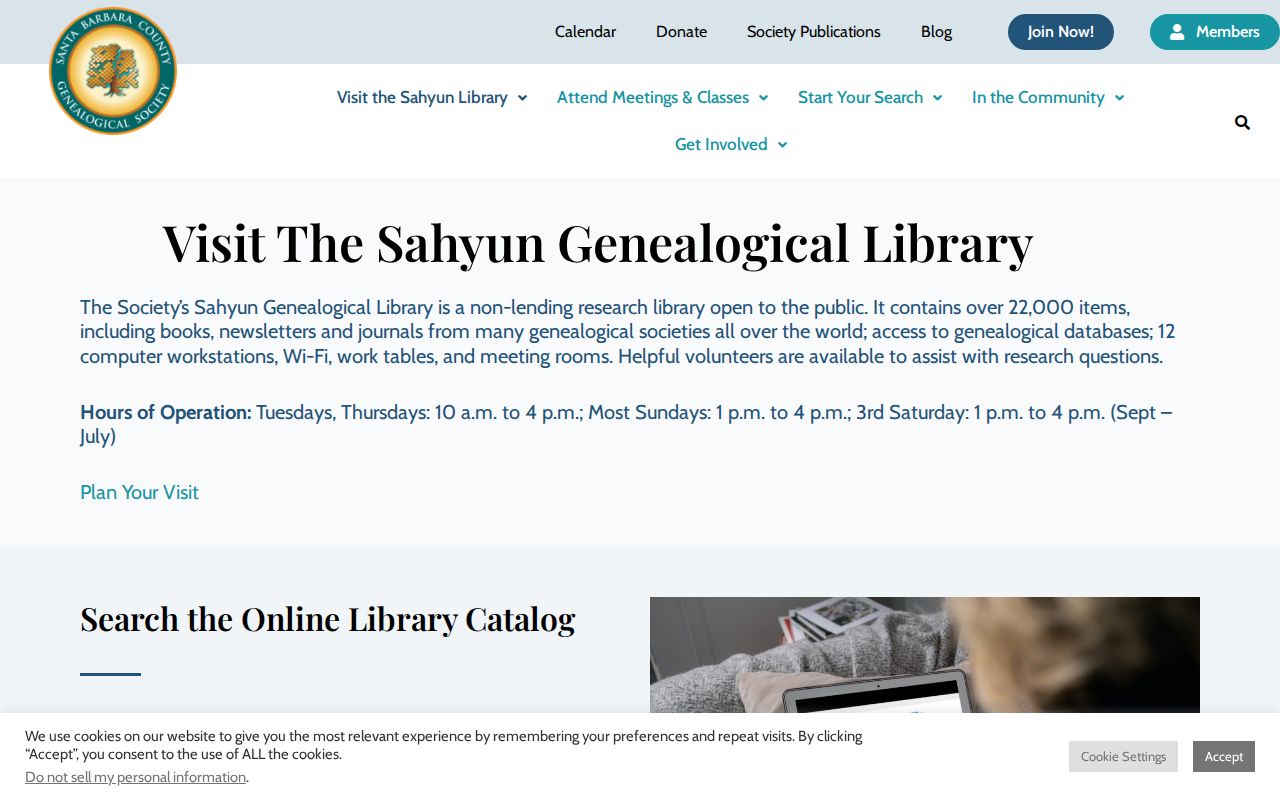
The image represents a working genealogy library, where printed directories can be checked against maps, yearbooks, cemetery indexes, and local-history files.
Santa Barbara's Gledhill Library at the Santa Barbara Historical Museum, 136 East De la Guerra Street, holds the deepest documented run. It is a public, non-circulating research collection with maps, newspapers, photographs, oral histories, clippings, manuscripts, and government records. Appointment and contact details are available through the Gledhill Library page, including archivist@sbhistorical.org and (805) 966-1601 ext. 105.
Gledhill's ArchivesSpace descriptions can identify a precise accession before a visit. The 1895-96 volume, for example, is described as an unrestricted photocopy with a linked digital facsimile and a request dialog. A catalog record is not the same as an online scan, so confirm whether the requested year is digitized.
The Gledhill collection is also represented by a local research image:
Open the Santa Barbara Historical Museum's Gledhill Library source before planning an appointment.
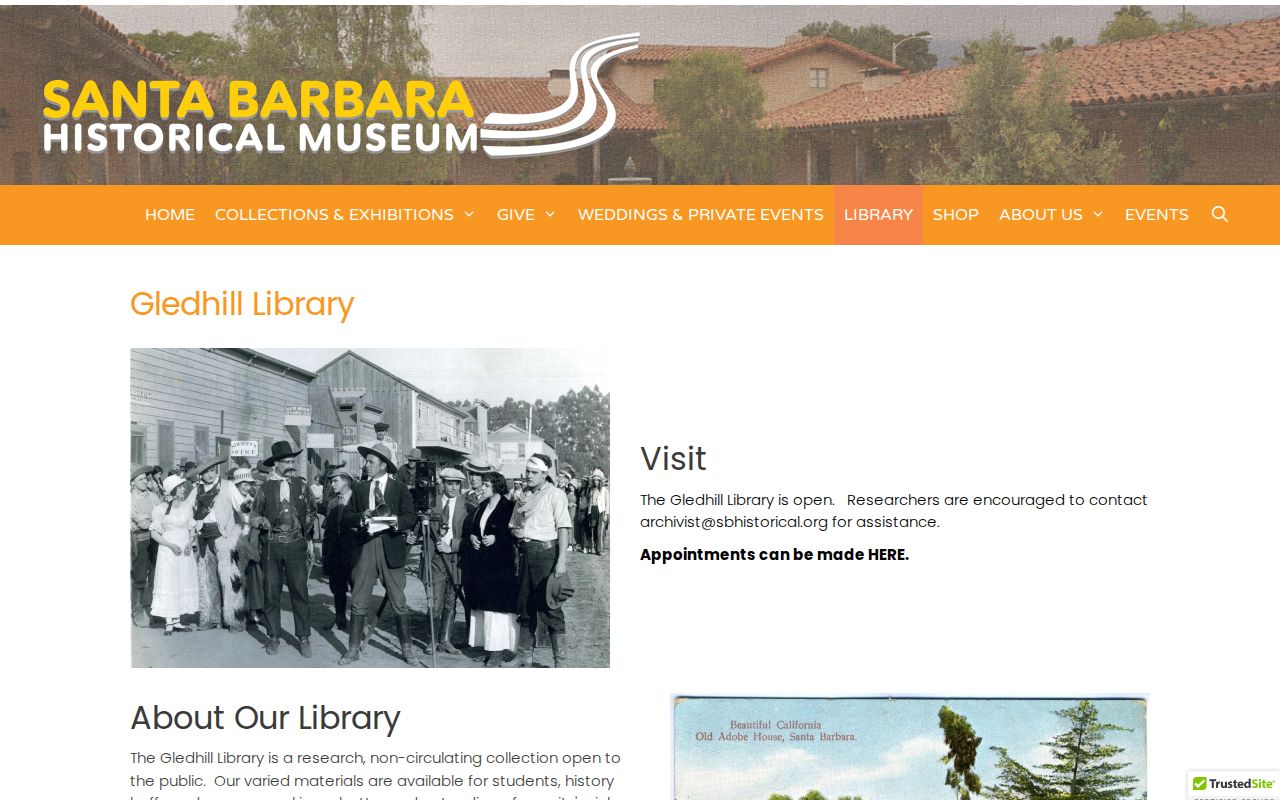
Its broader manuscript and map holdings can fill a gap when a directory entry gives only a name, trade, and address.
Santa Barbara Directory Research Elsewhere
Santa Barbara Public Library Central holds selected late-nineteenth and early-twentieth-century city directories according to the City's archaeological-resources guidance. The current public site does not publish an itemized year list. Ask Central staff or check the catalog before promising a particular volume. The Library also provides paid local-history and obituary research. Its documented obituary service searches microfilm for $25 per person over ten days around a death date, with a two to four week mail turnaround.
Santa Barbara's UCSB Special Research Collections is a complementary archive rather than a complete city directory shelf. More than 100 named Santa Barbara History Collections cover families, organizations, planning, development, preservation, environmental work, and local institutions in correspondence, photographs, newspapers, scrapbooks, and audiovisual material. UCSB also holds local newspapers and Sanborn maps, including late nineteenth-century through early 1950s material in slides, microfilm reel 84, and oversized-book form. The UCSB Santa Barbara Local History Collection is a strong companion when the directory is only one clue.
The UCSB collection source is shown here:
Review UCSB's Santa Barbara local-history collections for the archive context behind directory-era research.
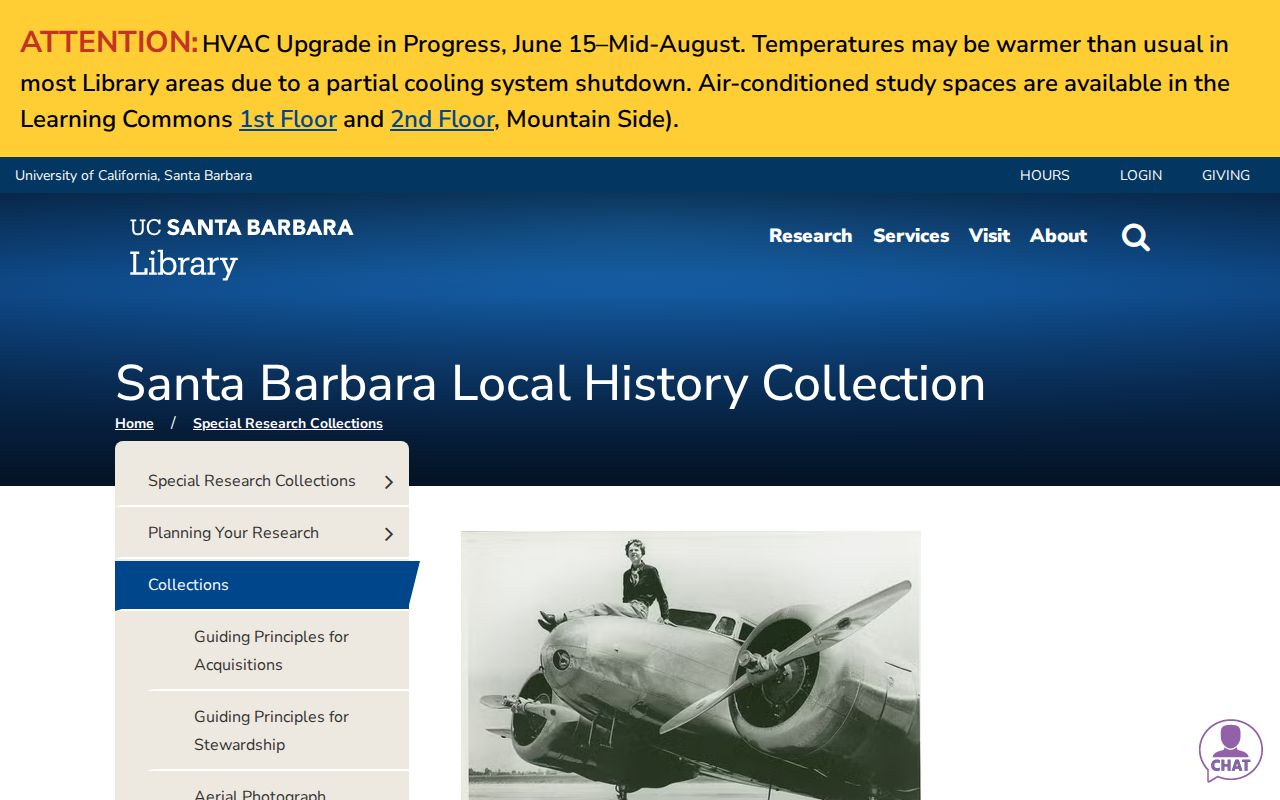
UCSB's newspapers, family papers, planning files, and map material help explain why a name or address appears, changes, or disappears in a city directory.
The California State Archives adds historical county and city material, including Santa Barbara deeds from 1844-1922, declarations of intention from 1850-1906, naturalizations from 1856-1939, wills from 1852-1936, and probate from 1862. Those holdings are archival routes, not substitutes for a printed directory, and an index transcription does not become a certified record.
Reading a Santa Barbara Directory Entry
A Santa Barbara city directory entry is a publication snapshot. The alphabetical resident section normally leads with surname, given name or initials, then may add a spouse in parentheses, an occupation, and a residence address. Classified pages group businesses by trade. Later volumes may use symbols for residence, boarding, widowhood, or other status, but every edition's abbreviation key controls the meaning.
| Name | Indexed surname first, followed by given name or initials. Spelling variants can matter. |
|---|---|
| Occupation | A trade or role that helps separate two people with the same name. |
| Address | A numbered street, corner description, or business location, depending on the edition. |
| Spouse or household note | Often shown in parentheses in later editions; the entry is not a full household roster. |
| Owner or renter mark | Any tenure symbol is edition-specific. Inspect the key instead of assuming a universal mark. |
| Widow notation | A possible family-history clue that needs confirmation in death, vital, newspaper, or probate records. |
The 1888 entry for Mariano Valenzuela is a useful local example. A genealogy case study notes later forms Marciano and Marino, lists him as a hostler, and places him at the east corner of Santa Barbara and Figueroa Streets. The transcribed entry does not supply a telephone number, age, birthplace, or complete household list. The later 1893 entry gives a different name form, occupation, and numbered address, showing why spelling, trade, address, and date belong together.
- Indexed name: Mariano Valenzuela, with Marciano and Marino as later variants in the linked case study.
- Trade: hostler.
- Place: east corner of Santa Barbara and Figueroa Streets.
- Missing from the transcribed entry: age, birthplace, telephone number, and a full family roster.
- Cross-check: later directory, declaration of intention, naturalization, and Great Register material.
- Criss-cross section
- The address-arranged half of later directories. Start with a street, follow house numbers, and read the listed householder or business.
- Householder index
- A publisher's selected address or person listing, not a count of every person at an address.
- Abbreviation key
- The volume's guide to symbols and short forms. Photograph it with the page containing an entry.
Tracing Families in Santa Barbara Directories
Use a printed volume as a set of dated snapshots. Start with the strongest known year and copy the entry exactly, including initials, spouse marker, occupation, address, and any symbol. Then move backward and forward through available years. A first appearance can bracket arrival, and a last appearance can bracket departure or death, but a missed canvass can create a false gap.
- Search the alphabetical section under surname variants, initials, married and former surnames, and the occupation or address anchor.
- Move one volume backward and forward. From 1911 onward, check the reverse section for the same address and nearby numbers.
- Pair the directory with the 1880 and 1900 census, then the public 1900-1950 schedules. The 1888 directory was presented by SBCGS as a local bridge for the missing 1890 census.
- Overlay Sanborn maps from Gledhill or UCSB to test street numbering, building footprint, use, and post-earthquake rebuilding.
- Search newspapers, obituary indexes, cemetery records, naturalization, probate, and deed material around each move or name change.
- When a historical hit needs a modern identity check, use the official person-record routes described in the Santa Barbara Resident Lookup.
A disappearance may mean a move, death, omission, a publisher change, or a change in the edition's geography. Only independent records can distinguish those explanations.
Santa Barbara Directory Timeline
The Santa Barbara local sequence is easier to use when its turning points are kept visible.
| Period | Local development | Research use |
|---|---|---|
| 1875 | L. L. Paulson's first countywide directory | County context before a regular city series |
| 1886 and 1888 | Independent Publishing Company city volumes | Alphabetical resident and business entries; 1888 helps bridge the lost 1890 federal census |
| 1893, 1895-96, 1897 | Named early city volumes; Bynon & Co. documented for 1895-96 | Fills selected late nineteenth-century gaps |
| 1901-1991 | Virtually unbroken printed run; publication ends in 1991 | Tracks movement, trade, and address changes across decades |
| 1911 | Reverse street and householder sections begin | Allows address-first lookup in the physical collection |
| 1956 | Montecito and Goleta coverage documented in the run | Broadens regional address tracing |
Santa Barbara County was one of California's original counties in 1850, and County real-estate and vital records reach back to that year. Directory years sit inside that wider record history rather than replacing it.
Santa Barbara Directory Geography
Geography is part of the record. The 1875 directory was countywide. Later city editions may be city-only, while the documented twentieth-century run adds Montecito and Goleta from 1956. Sahyun also holds Goleta directories for 1939 and 1941, a Goleta Chamber directory for 1971, and a Carpinteria-Summerland directory for 1940. Those are valuable local sources, but they should not be silently treated as Santa Barbara city editions.
The same caution applies to the Santa Barbara County name. A missing person in a local volume may have lived in Montecito, Goleta, Carpinteria, Summerland, Santa Maria, Lompoc, or another community outside that edition's scope. Record the edition's stated coverage before interpreting absence.
Limits of Santa Barbara City Directories
Printed publication ceased in 1991. There is no county or city government volume that simply continues the series. Modern assessor, deed, permit, court, vital, election, business, and professional records answer narrower questions and should be described as corroboration, not as a replacement comprehensive city directory.
Every entry is a publisher's snapshot assembled from canvassing and contributed information. A person can be omitted, appear after moving, be listed by initials, or be confused with a business address. A householder change can reflect a move, death, remarriage, correction, or a change in who supplied information. Use the title page, abbreviation key, neighboring entries, and a second record set before drawing a conclusion.
Note: A missing name may reflect an unlisted household, a coverage gap, or an address outside the edition's stated geography.